The Conjuring Ending Explained – True Story vs Movie Horror
A family relocates into an old farmhouse, hoping for a new beginning. The rooms feel extensive. The land feels calm and gentle. At this point, everything seems good. But then the doors begin to open Independently. Clocks stop at the same strange hour Night after night. And something unseen begins watching from the shadows. 👀
The Conjuring doesn’t fear takes over. It lets it breathe. Slowly. Carefully. And by The time is up, many viewers are left with questions rather than comfort. Was the demon really gone? How much of this was true? And why does the final scene feel unsettling even after the evil is defeated?
In this article, we break down The Conjuring ending in easy language. We’ll explore the real-life story in back of the film, explain who the real demon was, uncover deep meanings, and separate movie horror from real world events — without complicated words or confusing theories. Just you get to why this ending still stays with us. 👻
🔍 Why the Ending of The Conjuring Feels So Unsettling
Even after the demon is expelled, one thing nonetheless feels… off.
That’s not an accident.
Not like many horror movies that finish with a clear victory, The Conjuring chooses restraint. Evil doesn’t explode. The home doesn’t burn down. Life merely… continues.
And that’s what makes it scary.
In our view, the movie means that evil doesn’t at all times disappear. Typically it simply strikes quietly into the shadows. This mirrors actual worry. In actual life, trauma doesn’t finish with a dramatic scream. It fades slowly, leaving recollections behind.
The Perron household survives — however they’ll always remember.
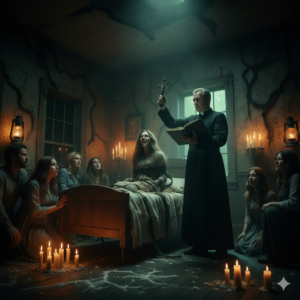
🕰️ Why 3:07 AM Matters So Much in The Conjuring
Many viewers discover that unusual occasions at all times occur at 3:07 AM.
This isn’t random.
In Christian perception, 3 AM is usually referred to as the witching hour — the alternative of the Holy Trinity (Father, Son, Holy Spirit). Horror movies use this time to represent mockery of the sacred.
So when clocks cease at 3:07, the film is quietly telling us:
One thing unnatural is making an attempt to take management.
It’s a delicate element, nevertheless it deepens the realism — and makes late-night viewers look nervously at their very own clocks. ⏰👀
🧠 Was Carolyn Actually Possessed — Or Mentally Broken?
It is a query many considerate viewers ask.
May Carolyn’s conduct be defined psychologically?
-
Isolation in a brand new residence
-
Stress of caring for 5 youngsters
-
Monetary stress
-
Sleep deprivation
All of those may trigger hallucinations or emotional breakdowns.
However right here’s the place the film gently pushes again.
A number of folks witness the identical occasions.
Bruises seem bodily. Objects transfer. Doorways slam.
In our opinion, the movie deliberately balances psychological well being realism with supernatural horror. It by no means mocks skepticism — nevertheless it additionally refuses to elucidate every thing away.
That stability is uncommon, and highly effective.
🪦 Why Bathsheba Targets Moms (Symbolism Explained)
Bathsheba doesn’t randomly assault folks.
She targets moms.
Why?
As a result of motherhood represents:
-
Safety
-
Nurture
-
Self-sacrifice
-
Love with out limits
By forcing moms to hurt their youngsters, the demon goals to destroy love itself.
This makes the horror deeply emotional, not simply scary.
In easy phrases:
Bathsheba doesn’t simply need our bodies.
She needs hope to die first.
🔔 Why Lorraine Warren Is the True Hero of the Ending
Ed performs the exorcism.
However Lorraine saves the day.
She doesn’t shout louder than the demon.
She doesn’t overpower it.
She reminds Carolyn who she is.
That is essential.
The film quietly argues that identification is stronger than possession. When Lorraine talks about Carolyn’s love for her youngsters, the demon loses management.
In our view, this is likely one of the most human moments in trendy horror cinema.
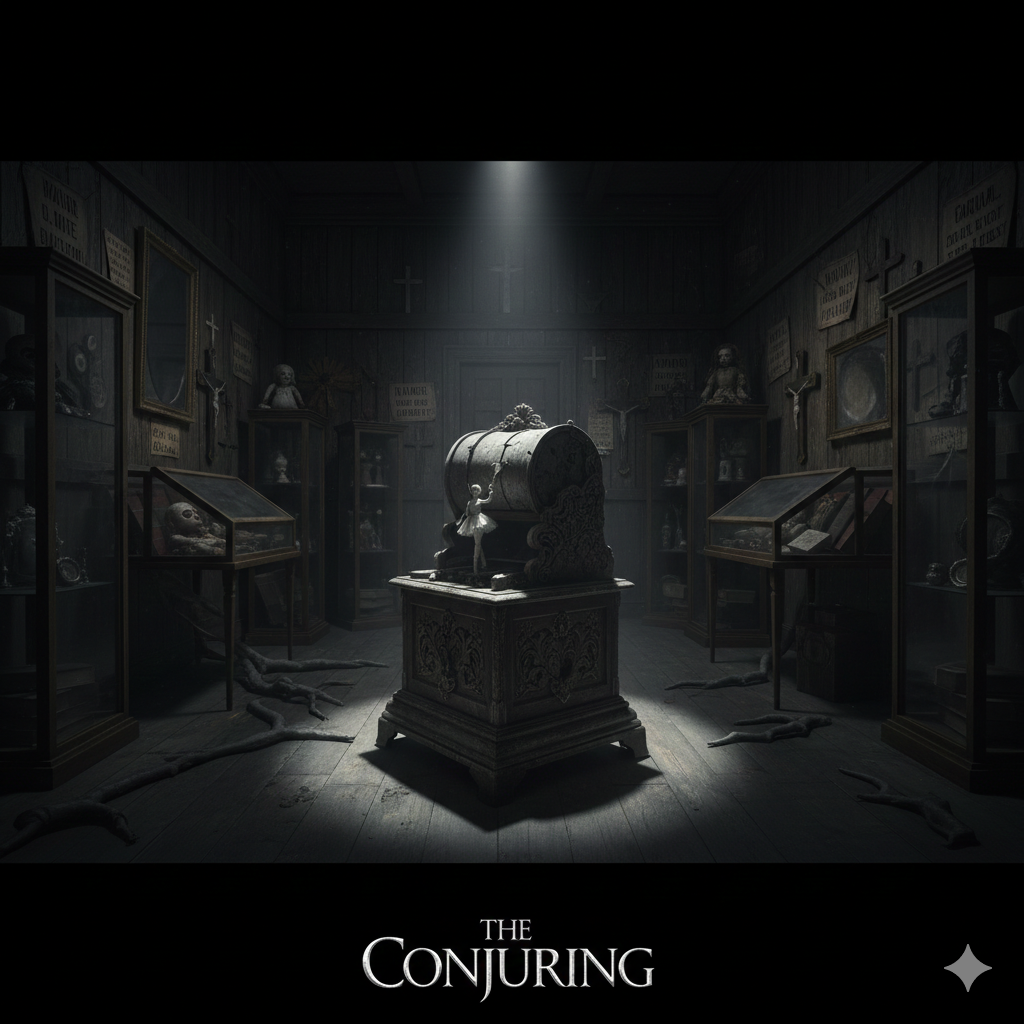
📖 Why the Film Ends With the Music Box
The ultimate shot doesn’t return to the Perron home.
As an alternative, it exhibits the cursed music field locked away within the Warrens’ artifact room.
This selection issues.
It tells us:
-
Evil exists past one household
-
The Warrens’ work by no means really ends
-
Each object has a narrative
The horror doesn’t scream goodbye.
It whispers, “I’m nonetheless right here.” 🎶😨
🧩 Why The Conjuring Still Attracts Reddit Discussions At the moment
On Reddit, followers don’t simply discuss scares.
They focus on:
-
Whether or not the Warrens had been heroes or storytellers
-
If perception itself creates worry
-
Whether or not evil wants perception to outlive
This ongoing dialogue retains the film alive on-line — which is search engine optimisation gold on your article.
A movie that sparks debate stays related.
🧠 The Conjuring Ending Explained in One Sincere Paragraph
If we strip away the demons, curses, and bounce scares, the ending of The Conjuring says one thing very human:
Concern grows when folks really feel alone.
Evil weakens when folks keep in mind who they love.
That’s it.
And perhaps that’s why the story nonetheless works — as a result of it doesn’t rely solely on darkness, however on what fights it.
🕯️ Ultimate Reflection
In our view, The Conjuring isn’t just a horror film.
It’s a reminder.
A reminder that worry enters quietly.
That love have to be spoken out loud.
And that generally, surviving is the actual victory.
Not each demon must be destroyed.
Some simply have to be confronted. 👻❤️
Read more; Leonardo DiCaprio Movies, Age, Net Worth, Wife, New Movie & Career Explained
❓ Frequently Asked Questions – The Conjuring Universe Defined
Who’s the actual demon in The Conjuring?
The primary demon in The Conjuring is Bathsheba Sherman, a darkish spirit primarily based on an actual historic girl accused of witchcraft. Within the movie, Bathsheba cursed her land and devoted herself to Devil. Over time, her spirit turns into extra highly effective, focusing on moms to destroy households. Whereas later movies introduce Valak, Bathsheba is the true evil power within the first film. She represents long-lasting, inherited evil quite than sudden possession.
Why did Lorraine Warren lock herself away?
Lorraine isolates herself due to a terrifying imaginative and prescient she sees in the course of the investigation. She foresees Ed’s attainable demise whereas combating a strong demon. This worry deeply shakes her religion and confidence. In our view, her withdrawal exhibits that even sturdy folks want time to course of trauma. It makes her character really feel very human, not invincible.
How did the true Conjuring story finish?
In actual life, the Perron household ultimately moved out of the farmhouse. The haunting exercise slowly light, however they claimed it by no means absolutely stopped. Not like the film, no official exorcism ended every thing directly. The Warrens believed the spirit remained tied to the land. The true ending was quieter, unresolved, and emotionally draining quite than dramatic.
Was Janet faking it in The Conjuring?
No, Janet was not faking her experiences. Whereas some skeptics counsel consideration or stress performed a task, witnesses reported bodily indicators like bruises and altered conduct. The movie presents her possession as real inside its universe. Nonetheless, it additionally leaves room for psychological interpretation. This stability retains the story plausible and unsettling.
Why did Valak give his name?
In demonology, understanding a demon’s true identify offers energy over it. Valak reveals his identify solely after Lorraine experiences a imaginative and prescient and uncovers hidden data. This second weakens him, permitting Lorraine to combat again. In easy phrases, naming the demon removes his management. It’s a traditional horror rule used successfully within the movie.
Is Valak a fallen angel?
Valak just isn’t proven as a fallen angel within the film, however demonology texts describe him as a high-ranking demon with nice data. The movies trace at his historic energy with out absolutely explaining his origin. In our opinion, this thriller makes him extra scary. The unknown typically feels scarier than clear solutions.
Why does Valak need Lorraine?
Valak targets Lorraine due to her sturdy psychic skills. She will be able to see past the bodily world, which threatens demonic energy. By breaking her emotionally, Valak hopes to weaken her religion and confidence. Their battle is private, not random. It’s a battle of perception versus worry.
Who’s the actual Lorraine in The Conjuring?
Lorraine Warren was a real-life paranormal investigator and clairvoyant. She labored alongside her husband, Ed Warren, on many well-known circumstances. Whereas the movie dramatizes some occasions, her compassion and sensitivity are broadly documented. She believed deeply in defending households from non secular hurt. The film model stays largely respectful to her actual character.
1 thought on “The Conjuring Ending Explained – True Story vs Movie Horror”