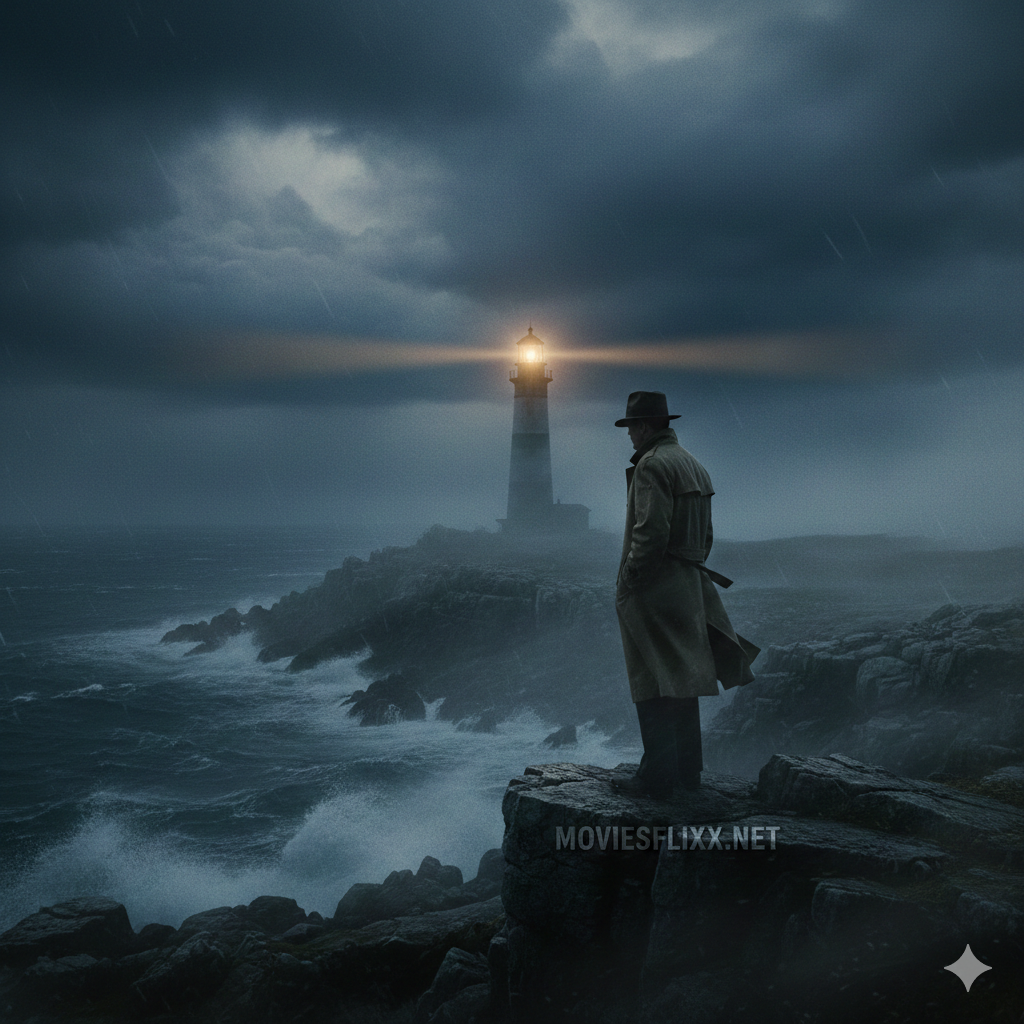
🧠 Shutter Island Ending Explained – Was Teddy Really Insane?
Few films stick with you lengthy after the credit roll.
Shutter Island is one in every of them.
Even years after its launch, individuals are nonetheless typing the identical query into Google:
“What actually occurred on the finish of Shutter Island?”
“Was Teddy insane, or was he telling the reality?”
And actually? That’s the brilliance of this movie.
Directed by Martin Scorsese and starring Leonardo DiCaprio, Shutter Island isn’t only a psychological thriller. It’s a slow-burning emotional tragedy disguised as a thriller. The ending doesn’t merely reveal one thing — it forces you to rethink all the pieces you’ve simply watched.
On this detailed information, we’ll break down the ending step-by-step, clarify what the lighthouse actually means, analyze Teddy’s closing determination, and reply the largest query of all: Was Teddy Daniels really insane?
Let’s dive in 🕯️
🎬 Quick Summary of Shutter Island (Spoiler-Light)
The film is ready in 1954 on Shutter Island, a distant and closely guarded island that homes Ashecliffe Hospital — a psychological establishment for the criminally insane.
U.S. Marshal Teddy Daniels arrives on the island along with his associate Chuck Aule, supposedly to research the disappearance of a affected person named Rachel Solando, who vanished from a locked cell with no hint.
From the start, nothing feels proper.
-
The guards are hostile
-
The medical doctors appear secretive
-
The sufferers communicate in riddles
-
Storms lower off communication
As Teddy investigates, he begins to imagine that Ashecliffe is hiding one thing much more harmful — unlawful experiments, thoughts management, and presumably even political manipulation.
However because the thriller deepens, the story slowly turns inward.
And that’s the place all the pieces modifications.
🏝️ What Happens at the End of Shutter Island?
🔦 The Lighthouse Revelation
For a lot of the film, the lighthouse represents the final word fact.
Teddy believes:
-
The lighthouse is the place experiments occur
-
Sufferers are lobotomized there
-
His spouse’s killer is hiding there
So when Teddy lastly reaches the lighthouse, we count on a surprising conspiracy.
As an alternative, we get one thing much more unsettling.
Dr. Cawley calmly explains that Teddy Daniels doesn’t exist.
His actual title is Andrew Laeddis.
He isn’t a U.S. Marshal.
He’s a affected person at Ashecliffe.
And this complete investigation?
It was a role-play remedy designed to assist him confront actuality.
🧠 Who Is Andrew Laeddis?
In keeping with the medical doctors:
-
Andrew Laeddis was a World Conflict II veteran
-
His spouse Dolores suffered from extreme psychological sickness
-
She drowned their three youngsters throughout a depressive episode
-
Andrew, unable to simply accept the reality, shot and killed her
The guilt shattered his thoughts.
To outlive emotionally, Andrew created an alternate identification:
-
Andrew Laeddis → Teddy Daniels (anagram)
-
Dolores Chanal → Rachel Solando (anagram)
On this fantasy:
-
His spouse turns into a sufferer
-
His youngsters by no means existed
-
He turns into a hero, not a monster
It’s tragic. And painfully human.
🤯 Was Teddy Really Insane?
That is the guts of the movie — and the explanation individuals nonetheless debate it.
Let’s break it down logically.
🧩 Evidence That Teddy Was Truly Insane
1️⃣ His Whole Identification Is a Delusion
The names alone are an enormous clue.
-
Andrew Laeddis = Teddy Daniels
-
Rachel Solando = Dolores Chanal
These aren’t coincidences.
They counsel a deeply fractured psyche, one which rearranges actuality to flee insufferable guilt.
2️⃣ His Hallucinations Are Persistent
Teddy repeatedly sees:
-
His useless spouse chatting with him
-
Youngsters showing in desires
-
Ashes falling like snow
These aren’t regular reminiscences.
They’re lively hallucinations, indicating extreme trauma-induced psychosis.
3️⃣ The Doctors’ Story Makes Sense
In our view, the medical doctors’ clarification is surprisingly coherent.
-
They supply information
-
They contain all the workers
-
They permit Teddy to roam freely
If this had been a cover-up, it might be unnecessarily complicated.
It appears much more probably they had been desperately attempting to save lots of him.
🧠 Evidence That Teddy Was NOT Insane (At Least at the End)
Now right here’s the place issues get attention-grabbing 👀
1️⃣ Teddy Accepts the Truth
After the lighthouse reveal, Teddy seems calm.
He says:
“My title is Andrew Laeddis… and I murdered my spouse.”
This isn’t denial.
That is acceptance.
For the primary time, he confronts actuality with out anger or worry.
2️⃣ His Final Behavior Is Clear and Controlled
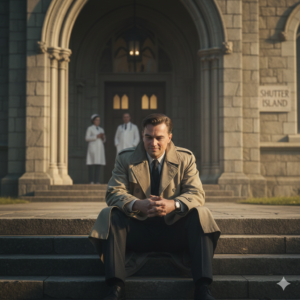
The subsequent morning, Teddy sits peacefully on the hospital steps.
He talks rationally.
He acknowledges Dr. Cawley.
He understands the results.
There’s no panic. No confusion.
That alone suggests consciousness.
3️⃣ The Final Line Changes Everything
“Which might be worse: to dwell as a monster, or to die as man?”
This line is devastating.
As a result of it implies:
-
Teddy is aware of who he’s
-
He is aware of what he’s performed
-
And he chooses to not dwell with it
In our view, that is not madness.
It’s a aware determination.
🕯️ What Does the Ending Really Mean?
The ending of Shutter Island isn’t about insanity.
It’s about selection.
Andrew Laeddis realizes:
-
He killed his spouse
-
His youngsters are gone perpetually
-
Residing with that fact is insufferable
So he chooses lobotomy — not as a result of he’s insane, however as a result of forgetting is simpler than remembering.
That’s what makes the ending tragic.
Not complicated.
Not intelligent.
Simply heartbreaking.
🧠 The Symbolism Behind the Ending
Martin Scorsese doesn’t spell issues out.
He reveals them.
Let’s have a look at just a few highly effective symbols.
🌊 Water
Water seems consistently:
-
Storms
-
Rain
-
The ocean
Water represents:
-
Guilt
-
Reminiscence
-
His youngsters’s deaths
Andrew fears water as a result of it reminds him of what he misplaced.
🔥 Fire
Fireplace seems in Andrew’s hallucinations of his spouse.
Fireplace symbolizes:
-
Anger
-
Destruction
-
The reality he can’t escape
Water and fireplace — two opposing forces — mirror Andrew’s inner battle.
🏥 The Lighthouse
The lighthouse is fact.
Shiny.
Unavoidable.
Blinding.
As soon as Andrew enters it, he can not disguise.
🎥 What Was the Director Trying to Say?
In interviews, Scorsese hinted that Shutter Island is about denial.
Not madness in a medical sense — however emotional denial.
In our view, the movie asks a disturbing query:
If the reality destroys you… is ignorance kinder?
There’s no straightforward reply.
And that’s why the movie works.
😔 Why the Ending Feels So Sad
Many thrillers finish with shock.
Shutter Island ends with resignation.
Andrew doesn’t battle.
He doesn’t scream.
He merely lets go.
That quiet acceptance is way extra disturbing than any twist.
📌 Final Verdict: Was Teddy Really Insane?
Right here’s the trustworthy conclusion:
-
Teddy was insane for a lot of the movie
-
However sane on the very finish
He remembered all the pieces.
He understood the reality.
And he selected to not dwell with it.
In our view, that makes Shutter Island much less of a thriller and extra of a tragedy.
❓ Frequently Asked Questions (FAQs)
🔹 Was Teddy Daniels a real person?
No. Teddy Daniels was a fabricated identification created by Andrew Laeddis to flee guilt.
🔹 Why did Teddy choose lobotomy?
As a result of residing with the reality was extra painful than forgetting it.
🔹 Did the doctors manipulate Teddy?
They manipulated the technique, not the reality. Their aim was to save lots of him.
🔹 Is Shutter Island based on a true story?
No. It’s primarily based on the novel by Dennis Lehane, although it explores actual psychological themes.
🔹 What is the actual meaning of Shutter Island?
The movie explores guilt, denial, trauma, and the human want to flee insufferable truths.
🎬 Final Thoughts
Shutter Island isn’t a film you merely watch.
It’s a film you course of.
The ending doesn’t provide you with consolation.
It provides you understanding.
And typically, that’s worse.
For those who’ve ever questioned your individual reminiscences, your individual selections, or the price of dealing with actuality — this film hits more durable than most.
And that’s why, years later, we’re nonetheless speaking about it 🖤
2 thoughts on “Shutter Island Ending Explained – Was Teddy Really Insane?”